

ARTICLE 5
Isn't Helping Others Supposed to Feel Good?
By Teresa Ford | Empowerment Coach | The Empowered Woman's Journey to Freedom
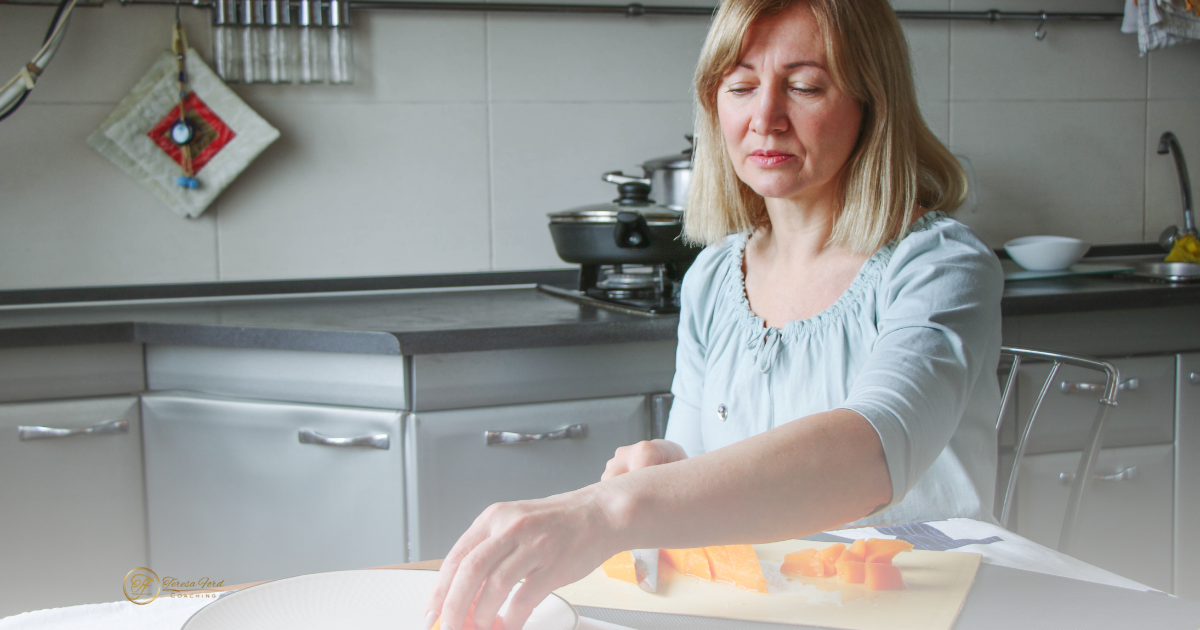
The exhausting link between people-pleasing, fawning, and the fear of disappointing those you love.
Have you ever felt irritated with the very people you love because they always seem to need something from you? Your husband has a favor to ask, your adult daughter needs help with the grandchildren, or your mother calls with another problem, and before you've even considered what you have planned for the day, you hear yourself saying, "Of course I can! What time should I be there?"
And just like that, you've volunteered for something you had absolutely no intention of doing when you woke up that morning. You had a million things on your calendar, but somehow, in the moment, someone needed you, and none of those things seemed as important as making sure they weren't disappointed.
Now you're rushing to get everything done, feeling annoyed that nobody seems to consider how much you already have on your plate. You're exhausted, your own plans have been pushed aside again, and you're beginning to resent the people you're working so hard to take care of.
But here's the part I want you to think about. You said yes. You smiled, made it sound like you had all the time in the world, and gave everyone the impression you were perfectly happy to help. So why does it feel like everyone else is taking advantage of you?
That's a question worth answering because I believe one of the greatest obstacles to a woman feeling genuinely happy and alive in her own life is the habit of making everyone else's needs more important than her own. When we practice that habit long enough, it can become so automatic that we hardly recognize ourselves doing it.
There's a name for this particular pattern of people-pleasing. It's called fawning, and understanding why we do it can help explain why a woman who genuinely loves caring for people can eventually reach a point where she cannot bear to give one more thing.
When Taking Care of Everyone Else Becomes the Way You Feel Safe
Have you ever noticed how responsible you feel for everyone else's happiness, even when nobody has asked you to be? Your mother is disappointed, your husband is irritated, or your adult children need something, and before you've even considered what you need, you're already figuring out how to make everything better. It's almost automatic, isn't it?
I want you to consider where that sense of obligation may have come from, because caring for someone because you genuinely want to is different from feeling compelled to take care of them because something inside you believes you have to. One leaves room for your own needs, preferences, and limitations. The other can leave you feeling as though you owe everyone the right behavior, the right answer, and the right amount of help so they'll continue to be happy with you.
For a woman who grew up with emotionally unavailable or unpredictable parents, keeping the peace may have been one of the earliest ways she learned to feel safe. When an adult's disappointment could turn into criticism, rejection, punishment, or emotional withdrawal, being agreeable became a very practical way to avoid trouble. Because children depend on their caregivers for safety and connection, those experiences can leave a lasting impression on how they respond to others' emotions.
Now she's a grown woman with a family, responsibilities, and a life of her own, but someone else's disappointment can still produce that familiar urgency to make everything okay. Her body tenses, her thoughts race, and she starts looking for a way to ease the discomfort, even if it means giving up something she genuinely wanted.
That's why obligatory emotional caretaking can be so exhausting. You're trying to meet someone else's needs while managing the fear of what might happen if you don't. And when the only thing that seems to bring relief is making sure everybody else is okay, you can spend your entire life caring for people without ever feeling like you've done enough.
What Fawning Looks Like in a Woman Who Appears to Have It All Together
One reason fawning is so hard to recognize is that it often looks like a woman who has her life together. She's polite, generous, accommodating, highly independent, and capable of getting an extraordinary amount done. She's the woman everyone calls because they know she'll find a way to help, and she's usually the last to admit she's overwhelmed.
From the outside, she appears to be doing beautifully. She's involved in her family, dependable at work, willing to serve, and always ready to make room for one more thing. She may even take pride in being the woman who can handle whatever life throws at her. And why wouldn't she? Being capable is a wonderful quality.
But when that capability is driven by a fear of disappointing people, something very different may be happening beneath the surface.
Fawning is a term used in trauma-informed conversations to describe an appeasing response to perceived interpersonal threat. It's the impulse to become whatever someone else needs you to be to preserve connection, avoid conflict, or reduce the risk of rejection. Although it isn't a separate clinical diagnosis, it's a useful way to describe a pattern many women recognize in themselves.
In my own words, fawning says, "I will be whatever you need me to be so I can survive." And before you think that sounds dramatic, I want you to remember that we're talking about a nervous system that may have learned these responses when you were very young. Your body may anticipate criticism, embarrassment, judgment, rejection, or someone withdrawing their affection.
To the adult woman you are now, another person's disappointment may be perfectly manageable. But to the part of you that learned being agreeable was the safest option, that disappointment can feel much more consequential.
So you act the part. You smile when you're frustrated, agree when you'd rather decline, and assure everyone you're fine when you're quietly coming apart at the seams. You may even become so accustomed to setting your feelings aside that you struggle to recognize what you actually want.
And here's where fawning becomes especially misleading in our relationships. Every time we pretend we have no needs, don't need support, and can manage everything ourselves, we give the people around us information that may be entirely inaccurate. We tell them we're happy to do something when we're resentful, and then we're disappointed when they take us at our word.
That's quite a predicament, isn't it?
I Watched My Mother Live This Way
I want to tell you about my mother because I had a front-row seat to what this kind of emotional strain can look like over a lifetime. I'm sharing her story because I believe there's something important to learn from watching a woman who appeared so capable in public while struggling so profoundly in the privacy of her own home.
My mother was a remarkable woman in many respects. She had a lovely singing voice, was an extraordinary horticulturist, and had a logical, intelligent mind. When she felt comfortable, she was charming and engaging, and her talents deserved to be enjoyed and appreciated.
But another side of her life very few people saw.
My father was a chiropractor, and the office telephone was routed to our home so my mother could answer patients' calls. I can still picture her picking up that phone and greeting the caller in the most pleasant, sing-song voice imaginable. You would have thought she was having the loveliest day of her life.
Meanwhile, she'd jut her jaw and bare her teeth at us children, holding up a shoe as a warning that we had better remain absolutely silent in the background of her professional conversation. Heaven forbid the patient on the other end of the line discover there were children in the house!
The contrast was extraordinary. On the telephone, the person heard a cheerful, accommodating woman who was happy to help. We children watched someone who seemed to hold herself together by sheer force, and we knew better than to interrupt the performance.
I saw the same thing happen at church. My mother would smile, laugh, visit with the other women, and accept additional assignments to teach or serve. I knew that if she hadn’t feared disappointing the other women, she would have wholeheartedly refused more assignments. I often wondered why she couldn't simply decline an invitation when she had so little energy left to give.
I now understand that giving an honest answer may have felt far more threatening to her than taking on another responsibility. In my view, she had learned to fear being herself, especially if it meant having needs, disappointing someone, or letting someone think poorly of her.
And when we got home, the woman who had been so pleasant and agreeable in public could become angry, critical, withdrawn, or frighteningly unpredictable. She was exhausted. She often seemed physically unwell. She isolated herself, stonewalled, and had emotional outbursts that left the rest of us trying to figure out how to stay out of her way.
As a child, I couldn't understand how someone could have so much kindness available for the outside world and so little emotional capacity left for the people who depended on her most.
Years later, I began to see her behavior through the lens of what she had experienced growing up.
My mother's father was an alcoholic, and his tirades could be terrifying. She learned that making a sound while he was angry could make the punishment significantly worse. Staying quiet, remaining unobtrusive, and essentially “playing dead” like deer do when attacked by a predator were ways she tried to protect herself when she had very little power to change her circumstances.
Now consider what a little girl might learn from an experience like that. She may come to believe that being visible is dangerous, that having needs invites trouble, and that the safest way to belong is to make herself as agreeable and undemanding as possible.
My mother's adult life was vastly different from her childhood. My father wasn't an alcoholic, and to my knowledge, he never physically laid a hand on her. Yet I watched her respond to ordinary expectations, and to the possibility of disappointing people, with an intensity that seemed far greater than the circumstances required.
I can't know precisely what was happening inside her nervous system, but I can recognize the pattern I witnessed. She had become extraordinarily skilled at presenting whatever version of herself she believed other people wanted to see, and the strain of maintaining that presentation seemed to follow her home.
A protective behavior that helps a child navigate frightening circumstances can become so familiar that she keeps relying on it even when her adult life offers a similar sense of past experience but doesn't present the “danger” of being cut off from her family, which threatens her ultimate survival.
When we leave those behaviors unexamined, the people closest to us may experience the emotional consequences of our over-activated state, which can cause miscommunication. Witnessing someone’s reaction that seems “out of proportion” to the situation is common when someone’s subconscious memory believes there’s a threat at hand.
Understanding the experiences that shaped my mother's behavior has helped me make sense of what I witnessed. It also helps me understand how those experiences affected my own nervous system, my former people-pleasing habits, and the fear I once felt around setting boundaries that actually held.
Her story powerfully shows why self-awareness matters. The way we manage our own discomfort doesn't happen in isolation. It shapes our marriages, our parenting, our friendships, and the emotional environment our children grow up navigating.
When we're so busy managing everyone else's opinion of us that we lose touch with our own feelings, resentment can become painful evidence that something in the way we're living needs our attention.
The Resentment That Comes After You've Given Everything Away
Here's where I want to bring this back to you, because you may recognize a much milder version of the same pattern in your own life.
Maybe you don't have emotional outbursts. Maybe you're the woman who keeps everything to herself, handles the problem, and tells everyone she's fine. But somewhere along the way, you've started feeling increasingly irritated with the people who depend on you.
Your husband doesn't seem to notice how much you do. Your adult children assume you'll be available whenever they need something. Your mother expects you to rearrange your plans, and your friends know you'll always show up.
You love these people, and you want to be generous with them. But you're also tired of feeling like everyone else has needs while yours are continually pushed to the back of the line.
Now I want to ask you something that might be a little uncomfortable, and I'm asking it with all the love of a friend who wants you to experience something better.
How often have you given people the impression you're happy to do something when you're actually afraid of what might happen if you say no?
Think about that for a minute.
When you agree to help because you're afraid someone will think you're selfish, you may experience a moment of relief. You've avoided an uncomfortable conversation, nobody's upset with you, and the relationship feels safe for the time being. But you've also committed your time, energy, and attention to something you may not have wanted. Later, when you're rushing to finish your own responsibilities, that resentment starts creeping in.
Why am I always the one doing everything? Why doesn't anyone consider what I need? Why can't somebody take care of me for a change? Those are important questions, and I want you to pay attention to them because resentment often points us toward something we haven't been willing or able to acknowledge.
Maybe you've been giving more than you can. Maybe you need more support, more rest, or more reciprocity in your relationships. Maybe you've let people demand your time without considering whether those demands are reasonable. Sometimes the difficult realization is that you've expected people to recognize needs you've spent years teaching yourself to hide. I know. That one can sting a little. Been there, done that.
You may wish your husband would offer to help, but every time he asks how you're doing, you tell him everything's fine. You may want your children to respect your time, but you continually rearrange your plans without telling them what you've sacrificed. You may desperately want someone to take care of you for a change, but the moment someone offers, you insist you've got it handled.
Then you wonder why you're the only one doing everything.
People cannot consistently respond to needs they don't know exist. And while some relationships genuinely lack the reciprocity and consideration you deserve, we also have to examine the mixed messages we send when we make ourselves endlessly available.
That's the uncomfortable truth about fawning. It can create the very relationship dynamics we have said we didn’t want, and eventually we resent being in them.
Why Your Body May Still Believe Someone Else's Happiness Is Your Responsibility
One thing I teach women is that our nervous systems constantly respond to what we perceive as safe or threatening. Sometimes the threat is immediate and obvious. Other times, an ordinary interaction can remind us of an earlier experience when connection, approval, or emotional safety felt uncertain.
Imagine that you're running late for an appointment and you start feeling anxious about what everyone will think when you arrive. Your body becomes activated, your thoughts race, and you hurry to avoid the embarrassment of being late. Then traffic clears, you arrive ten minutes early, and you feel relief as you realize everything will be okay.
Our bodies can move through activation and return to a calmer state. But when someone has spent years anticipating criticism, anger, or rejection, returning to calm can become harder. The body may remain on alert, looking for the next sign that something is wrong.
Now imagine living with that same sense of urgency around the emotional needs of the people you love. Your husband is quiet, and you're wondering whether you've done something to upset him. Your mother sounds disappointed, and you're already thinking about how to make it up to her. Your adult child is struggling, and you're mentally rearranging your entire week to fix it.
Nobody has necessarily asked you to take responsibility for their emotions, but your body has already begun preparing you to do exactly that. You become hyper-attentive to everyone else's feelings, hyper-functional because being useful feels reassuring, and hyper-independent because you've learned that relying on yourself is more predictable than asking for support. And all the while, you're trying to create a sense of belonging by being something to everyone. That's so much work!
Think about the emotional whiplash of spending your day anticipating what everyone needs, making sure nobody's disappointed, and presenting yourself as a woman who can handle anything, only to collapse at the end of the day feeling angry that nobody has noticed how much you're carrying.
The exhaustion is real. So is the resentment. The question becomes whether the way you've learned to feel safe is letting you experience the life and relationships you actually want.
The Nervous System Cost of Always Being the One Who Holds Everything Together
Another piece of this conversation deserves our attention, and it's happening inside your body. When you constantly anticipate what everyone needs, manage their emotional reactions, and try to avoid the next uncomfortable conversation, you may spend considerable time in a heightened state of stress.
The American Psychological Association's research-based explanation of how stress affects your health describes how prolonged stress can contribute to fatigue, difficulty concentrating, irritability, and physical health problems. So when I talk about the emotional exhaustion of over-functioning, consider how much energy you spend before you've even begun taking care of everyone. Learning to recognize your own limits, listen to your body's signals, and honor your capacity becomes an important part of rebuilding a relationship with yourself.
Why People-Pleasing Can Turn Into Resentment
Have you ever noticed how quickly your generosity can turn into resentment when everyone counts on you? You keep showing up, rearranging your schedule, handling the details, and telling yourself it's easier than disappointing someone. Meanwhile, your own needs keep getting pushed to the bottom of the list.
In a Cleveland Clinic article on people-pleasing, clinical psychologist Dr. Adam Borland explains that consistently prioritizing others' needs at the expense of your own can lead to stress, frustration, and resentment. And here's where I want you to become curious: How many times have you agreed to something because you genuinely wanted to, and how many times did you agree because dealing with someone's disappointment felt even more exhausting?
What Is Your Resentment Trying to Tell You?
I believe our emotions are breadcrumbs. They tell us what we're experiencing, what matters to us, and where something in our lives may need attention.
Resentment is particularly interesting because it often shows up after we've repeatedly agreed to something that conflicts with what we genuinely want or need. We may have said yes because we felt obligated, feared someone's reaction, or couldn't tolerate the discomfort of disappointing them. Then we get angry that we're the ones paying the price.
Instead of judging yourself for feeling resentful, I'd like you to become curious about it. When you notice that familiar irritation building, ask yourself what you've been agreeing to that you don't actually have the capacity or desire to do. Then go a little deeper.
What are you afraid would happen if you stopped doing it? Would someone criticize you, withdraw their affection, question your loyalty, or accuse you of being selfish? Would you feel like you were failing as a good wife, mother, daughter, or friend? Or would you simply have to tolerate the discomfort of disappointing someone? That last question matters because many of us have spent years trying to avoid a feeling other adults can experience and manage on their own.
Disappointment is part of being human. So is frustration. So is hearing an answer we weren't hoping for.
When we begin recognizing that other people's emotions belong to them, we can start making decisions based on our own needs and values rather than fear of their reactions. That doesn't mean we become inconsiderate. It means we can care about someone without automatically making their emotional experience our responsibility.
The Most Powerful Thing You Can Do Is Witness Yourself Fawning
Now, I want to give you something practical because awareness is where this work begins.
The next time you hear yourself saying, "Of course I can! What time should I be there?" while some part of you knows you already have more than enough to do, notice what just happened.
Maybe you recognize it immediately. Maybe it takes until you're driving home, feeling irritated about another commitment you've made. Or maybe you don't recognize it until you're lying in bed that night, replaying the conversation and wondering why you agreed. That's okay. We're practicing.
One of the most powerful things you can do is witness yourself fawning without turning it into another chance to criticize yourself. You learned to respond this way for a reason, and understanding that reason gives you a place to begin.
Instead of asking, "Why do I keep doing this?" with frustration, try asking, "What was I afraid would happen if I gave an honest answer?"
Perhaps you feared disappointing someone. Perhaps you worried they'd think you were selfish. Maybe you felt that familiar urgency to be useful because being needed has always felt like evidence that you belong. Whatever you discover, consider how old that belief might be and whether it still serves the woman you are today.
You may realize that Little You learned a long time ago to keep everyone happy because it helped her feel safer. Now, Adult You can practice something different.
You can check your calendar before making a commitment. Consider your own energy before offering to help. You can tell someone you'd love to be there but won't be available this time. And if they're disappointed, you can allow them to have that experience without immediately rushing in to make it better.
The first few times may feel uncomfortable, especially if you've spent decades believing that being a good woman means being available to everyone who needs you. But we can learn to move through discomfort, and each time you practice responding from your own values rather than out of automatic fear, you become more familiar with trusting yourself.
Sometimes you'll recognize the pattern only after you've already agreed. Sometimes you'll catch yourself halfway through explaining why you can't help. And occasionally, you'll surprise yourself by pausing before you answer and realizing you actually have a choice.
That's progress, my friend. And progress is how we learn to live differently.
You Can Love People Without Giving Yourself Away
I want to leave you with something I wish more women understood about generosity.
A beautiful difference exists between being a woman who loves to give and being a woman who feels obligated to give because she fears what will happen if she doesn't. One expresses who you are. The other can become a way to manage your relationships so you don't have to experience someone else's disappointment.
And when you've spent years giving from obligation, it's understandable that resentment eventually shows up. You've been trying to meet everybody else's needs while hoping someone will notice yours along the way.
But what if you began taking your own needs seriously enough to communicate them? What if you let your husband know when you were overwhelmed, gave your children the chance to make other arrangements, or let your mother be disappointed without making it mean you'd failed her? What if you trusted that the people who love you could learn to respect your limits, even when those limits required them to adjust their expectations? And what if you discovered that being generous could feel enjoyable again because you were choosing how to give instead of feeling compelled to give everything you had?
I think that's a beautiful possibility for a woman who's spent much of her life being everything to everyone.
You can be loving, compassionate, generous, and deeply committed to your relationships while also honoring the time, energy, and emotional well-being that belong to you. Because the life you've worked so hard to care for includes you, too.
I would love for you to experience what happens when you start living as though that's true.
What If Helping the People You Love Could Feel Good Again?
Have you ever wondered why you feel so resentful toward the very people you love helping, especially when you're the one who keeps saying yes?
In my
Self-Discovery Intensive, we'll spend two hours exploring how your childhood experiences, nervous system responses, and relationship patterns may have taught you to feel responsible for everyone else's happiness. Together, we'll connect the dots between your automatic yes, the fear of disappointing others, and the exhaustion that follows, so you can begin recognizing where your own needs deserve more attention.
For a one-time investment of $247, let's explore how you can enjoy caring for the people you love while finally making room for yourself, too.
Teresa Ford is an empowerment coach and host of FLOURISH: The Woman in Progress. Through The Empowered Woman's Journey to Freedom, she helps women explore nervous system awareness, self-trust, boundaries, and the freedom to live in alignment with their own needs and values.
This article is educational and is not a substitute for individualized medical or mental health care.